
Restlessness Against Emptiness
The Black-Eyed BlondeThis flow traces how boredom drives characters toward danger or escape, while the pursuit of excitement repeatedly fails to provide lasting meaning.
increasing Bearing strength in each event
 decreasing
Bearing strength in each eventdecreasingThe Slow Afternoon
Stillness in the City
Marlowe’s Restlessness
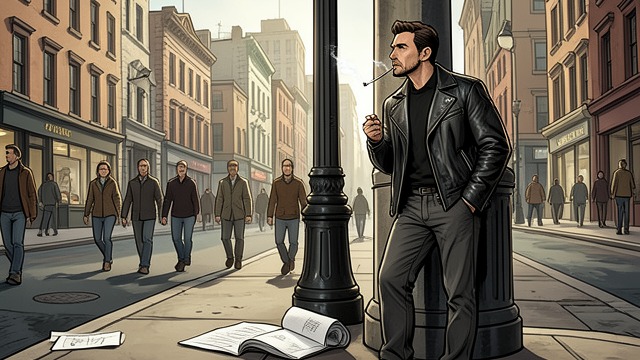
Philip Marlowe opens on a summer afternoon when the city seems almost motionless. His recent jobs have been modest, and he watches ordinary street life while waiting for the telephone to ring.
Desire for Interruption
The quiet is not peaceful so much as suspended. Marlowe fills it with observations, jokes, tobacco, and reflections, but he still welcomes the arrival of Clare Cavendish. Her appearance gives the stalled day a direction, though the excitement she brings will soon become inseparable from danger and uncertainty.
Clare’s Brief Escape
Danger as a Stimulant
An Admission of Boredom
Clare explains that Nico Peterson represented danger and made her feel alive in a slightly soiled way. Her words reframe the affair not as a deep romance but as an attempt to interrupt a life that feels constrained by wealth, marriage, and repetition.
A Passing Sense of Freedom
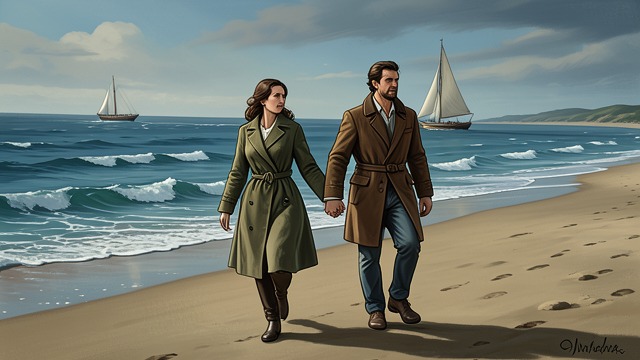
On the private beach, Clare links her arm through Marlowe’s and says how much she loves the place. The ocean and walk give their conversation a temporary openness, but the moment cannot make her larger circumstances disappear. Her restlessness finds brief expression without finding a durable answer.
Nico’s Risky Reinvention
Escape as Excitement
A Restless Scheme
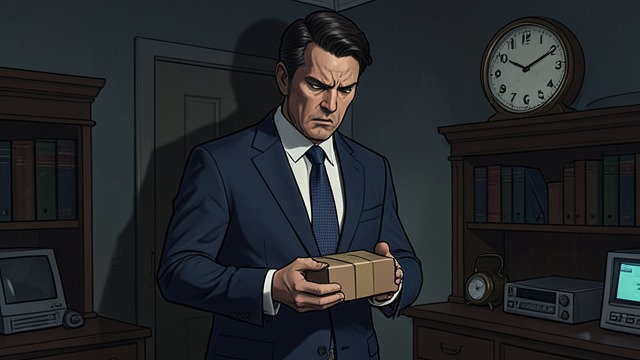
Nico Peterson’s work as a minor agent and his pursuit of money and opportunity leave him dissatisfied with an ordinary life. When entrusted with a valuable heroin shipment, he diverts it and stages his death, gambling that a new beginning can be built from deception.
Freedom Turns to Flight
The plan initially gives Nico distance from his father and his old identity, but it also makes him a target for the people whose goods he has taken. His escape becomes a narrowing series of frightened choices rather than a liberating adventure. The novel presents reinvention as an enticing promise that can turn into another form of captivity.
The Addict’s False Relief
Relief with a Price
Everett’s Overdose
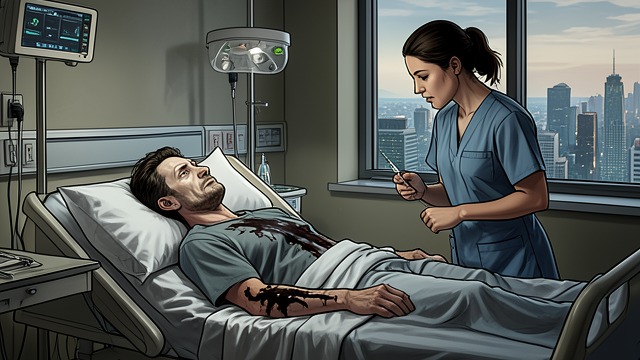
Everett Edwards III is found unconscious after taking heroin, with old and new needle marks on his arm. Clare calls Philip Marlowe for help because she fears both for her brother’s life and for the consequences of their mother learning about his addiction.
A Habit That Narrows Choice
Dr. Loring revives Everett and warns that continued heroin use is likely to kill him. The episode reveals the difference between seeking a moment of sensation and finding a way to live: Everett’s attempts to escape weakness and boredom have made him dependent on a substance that further diminishes his agency.
The Failed Escape
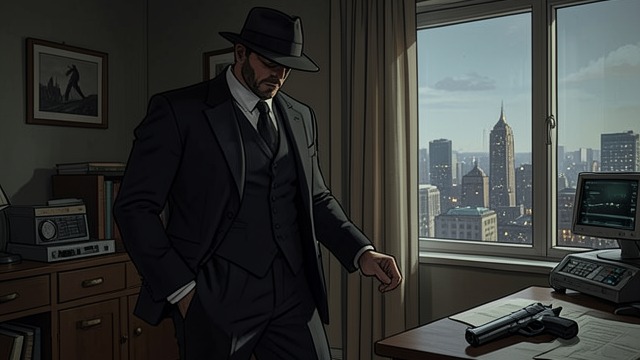
Reinvention Without Renewal
A Changed Life
Terry Lennox returns under a new appearance and name after a staged suicide, having remade himself in Mexico with help from Mendy Menendez. He retains his practiced elegance, but Marlowe learns that Terry has become entangled in heroin trafficking and has used the people around him to manage his debts.
The Cost of the New Self
Terry’s polished identity cannot restore the honor Marlowe once associated with him. His return ends in a fatal confrontation at Langrishe Lodge, after Everett shoots him. The episode closes the promise of escape with a harsher realization: changing one’s name and circumstances may preserve style, but it cannot guarantee a new moral life.
At the beginning of the story
During the garden and beach walk
Before and during the staged hit-and-run
Late at night, after Marlowe visits Langrishe Lodge
Near the ending, during Terry Lennox’s return
